Great Idaho ShakeOut 2026: a household drill that teaches more than one move
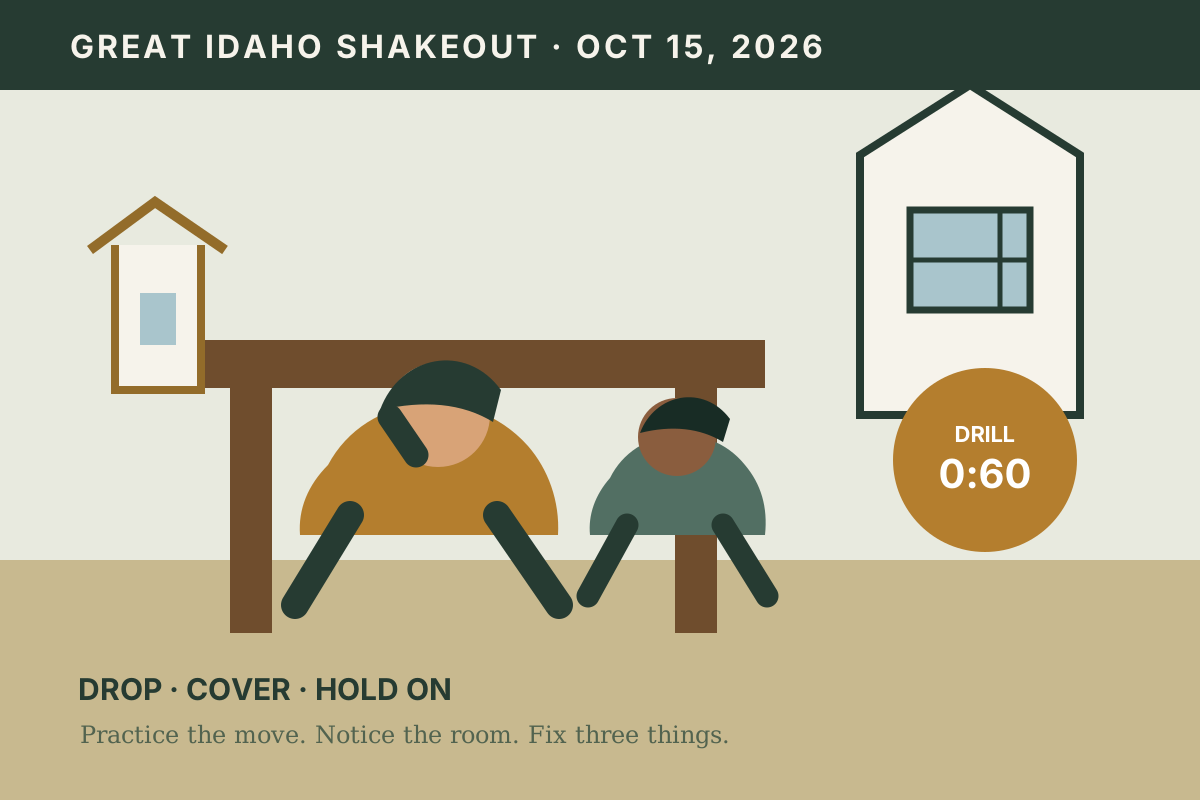
The Great Idaho ShakeOut is Thursday, October 15, 2026. The central drill takes one minute: Drop, Cover, and Hold On. That minute becomes far more useful when a household uses it to notice what is within reach, who needs a different protective action, and what could block the next safe step.
Idaho earthquakes are not just a school exercise. The U.S. Geological Survey describes Idaho and Montana as earthquake country, and the Idaho Office of Emergency Management leads a statewide ShakeOut effort each October. The point is not to predict where or when shaking will occur. It is to rehearse a safe response before surprise and noise make decisions harder.
This guide turns the annual event into a short household practice. It does not require simulated damage, an alarm siren, or a large supply purchase. Set aside about 20 minutes, choose one room, and give everyone permission to move only within their ability. Children, older adults, people with disabilities, pets, and visitors belong in the plan from the start.
Five minutes before the drill
Tell everyone that this is a practice and that nobody should make a fast, risky movement for realism. Pick the room where people actually gather—often a kitchen, living room, home office, or classroom. Identify sturdy tables or desks that can be reached in a few steps. Do not ask anyone to cross a room during the simulated shaking.
Look up rather than only looking down. Note windows, hanging fixtures, tall bookcases, televisions, mirrors, open shelves, and heavy objects above seats. Falling or flying items are a common source of earthquake injury. The drill should reveal these hazards without anyone touching, climbing, or moving furniture during the timed minute.
Choose one person to say “earthquake” and start a 60-second timer. Choose a second person to observe without grading anyone. The observer should watch for blocked routes, difficult movements, unsecured objects, and whether head and neck protection is practical. If everyone needs to participate, place a phone where it can record only the floor area and delete the recording after the debrief.
Set up without staging hazards
- Keep shoes on and clear tripping hazards before starting.
- Put pets in their normal safe indoor location; do not hide or release them for the drill.
- Keep mobility devices, service-animal gear, hearing devices, glasses, and medication where they normally are.
- Tell neighbors only if drill noise could concern them.
- Stop immediately if anyone feels pain, dizziness, panic, or uncertainty.
The one-minute protective action
When the caller says “earthquake,” most people indoors should Drop onto hands and knees before shaking could knock them down. Cover the head and neck with one arm and, if a sturdy table or desk is within a few steps, crawl underneath it. Hold On to the shelter with one hand so it can be followed if it shifts. If no shelter is nearby, stay low beside an interior wall away from windows and protect the head and neck.
Do not run outside. Do not stand in a doorway. Idaho emergency guidance explains that modern doorways do not provide special protection and that moving through falling debris increases exposure. The observer should call out “aftershock” once during the minute so everyone practices staying in position rather than getting up at the first pause.
People already outdoors should move to an open area away from buildings, trees, streetlights, and utility wires if that can be done safely, then drop low and protect the head and neck. Drivers should pull over in a clear location, stop, set the parking brake, and remain in the vehicle until shaking stops. A household drill can discuss these settings; nobody needs to drive or walk into a roadway to practice them.
At 60 seconds, the caller says “shaking stopped.” Pause before standing. In a real event, broken glass, shifted furniture, damaged utilities, and aftershocks could make the familiar room unsafe. Use a chair, table, or another stable support if rising slowly is part of someone’s normal movement.
Adapt the action to each person
A useful drill respects the way each person moves. The Idaho Office of Emergency Management advises people who use a cane to sit on a chair or bed, protect the head and neck, and keep the cane nearby. People using a walker or wheelchair can lock the wheels if possible, get as low as they safely can, cover the head and neck with their arms or a pillow, and hold on until the shaking stops.
Someone who cannot get under a table can move away from windows only if the safer position is nearby. A firm pillow, book, bag, or forearm can help protect the head and neck. Practice where the person normally spends time, then place suitable protection within reach. Do not assume a caregiver will be close enough to help during the first seconds.
For a person who is Deaf or hard of hearing, decide how the drill call will be seen or felt as well as heard. For someone who is blind or has low vision, keep the route and protective space consistent and describe what moved during the drill. If a person becomes overwhelmed by sudden alarms, use a calm spoken cue and rehearse the sequence in small parts before timing it.
Include medication, power-dependent medical equipment, and communication devices in the debrief, not under the table. Ask what must remain reachable after shaking and what backup is needed during an outage. The broader Idaho power outage plan covers refrigeration, charging, private wells, and support needs.
Pets belong in the plan, but not in the timed move
Do not chase a frightened animal or attempt to carry it while objects may be falling. People protect themselves first. After the simulated shaking, check where the pet went and whether broken glass, an open gate, or fallen objects could separate it from the household. Store leashes, carriers, medication, and identification where an adult can reach them after the room is safe. Review the Idaho pet evacuation kit if anything is missing.
Practice the first five minutes after shaking
Real earthquakes may be followed by aftershocks. Before moving, look for falling objects, glass, fire, damaged wiring, chemical spills, and structural damage. Put on sturdy shoes if they are within reach. Check yourself first, then household members and neighbors who may need help. Call 911 for life-threatening emergencies; avoid tying up emergency lines for general information.
Do not turn utilities off as part of a drill. Learn where controls are and follow the utility’s instructions about when shutoff is necessary. Gas service may require a qualified professional to restore it. If you smell gas, hear escaping gas, see damaged wiring, or suspect structural failure, leave the area by a safe route and follow current instructions from emergency officials.
Choose two communication methods. A text message may work when voice calls are congested, and an out-of-area contact can collect family updates. Decide on a nearby meeting place and another outside the neighborhood. The drill should expose vague instructions such as “meet somewhere safe” and replace them with an exact location and fallback.
Earthquake shaking can also interrupt power and water. Do not test a generator during the earthquake drill. Instead, check that the household knows where safe battery lighting and stored water are kept. If backup power is part of the plan, use the separate portable generator safety guide before operating it.
Run a ten-minute debrief while the room is fresh
Ask each person what was easy, what was hard, and what was out of reach. The observer should name physical facts rather than criticize behavior: “the chair blocked the table,” “the wheelchair brake was hard to reach,” or “the shelf above the couch holds a heavy planter.” Record no more than three fixes. A short list is more likely to be completed than a complete home retrofit plan.
Give each item an owner and a date. Move a heavy object to a lower shelf today. Measure and photograph a bookcase connection before buying appropriate hardware. Ask a qualified installer about attachment to wall framing when the construction is unclear. Put shoes and a flashlight beside the bed. Then use the existing room-by-room earthquake home check to continue through the house over several weekends.
Public earthquake discussions often focus on supplies, but drills reveal access problems that shopping lists miss: a carrier buried in a garage, a meeting place nobody remembers, or a phone charger on the far side of broken glass. Supplies matter after the shaking. Protective action and reachable equipment matter during the first minute.
Five questions worth writing down
- Could everyone protect their head and neck without crossing the room?
- What object was most likely to fall, slide, or block an exit?
- Could each person reach shoes, light, medication, and a communication device?
- Where did pets go, and could they be secured after shaking?
- What are the household’s exact meeting place and out-of-area contact?
A 20-minute Idaho household schedule
- Minute 0–3: explain the calm cue, identify nearby cover, and choose an observer.
- Minute 3–4: call “earthquake” and practice Drop, Cover, and Hold On for 60 seconds.
- Minute 4–7: pause, scan for simulated hazards, and discuss the safest route out without evacuating.
- Minute 7–12: locate shoes, lights, medication, pet gear, and communication information.
- Minute 12–18: answer the five debrief questions.
- Minute 18–20: assign up to three fixes and schedule the next drill in a different room.
You can register a household or organization with the Great ShakeOut, but registration is not required to practice. The official 2026 ShakeOut date is October 15. If 10:15 a.m. does not work, choose another time that day—or any day when the household can participate safely. Practicing in a bedroom, garage, workplace, or while discussing travel conditions makes the response less dependent on being beside the same table.
Finish by bookmarking the official Idaho resources page. During an actual event, use current information from local emergency management, the Idaho Office of Emergency Management, the U.S. Geological Survey, utilities, and first responders. A drill is successful when it produces a safer habit and a few completed fixes, not when it feels dramatic.
Sources and further guidance
- Great ShakeOut: 2026 date and regional participation
- Great Idaho ShakeOut: drill manuals and participation resources
- Idaho Office of Emergency Management: preparedness and the Great Idaho ShakeOut
- Idaho Office of Emergency Management: Drop, Cover, and Hold On and accessibility adaptations
- U.S. Geological Survey: ShakeOut drill and protective actions
- U.S. Geological Survey: Idaho seismicity and the Soda Springs sequence