An Idaho power outage plan that starts before the lights go out
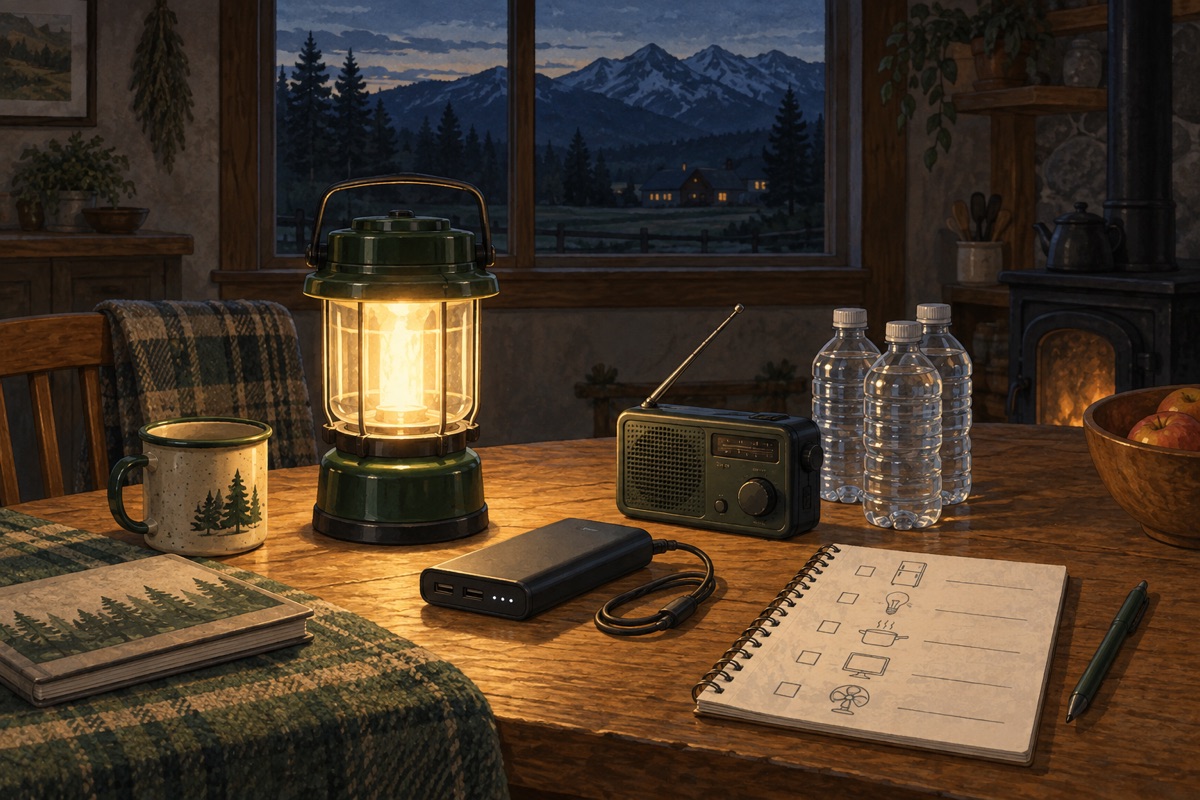
A power outage is rarely just a lighting problem. It can stop a well pump, interrupt refrigerated medication, close nearby stores, and make normal communication surprisingly difficult. The useful plan starts by listing what electricity quietly does for your household every day.
Make an electricity-dependent list
Walk through a normal morning and evening. Include the well pump, electric heat, garage door, phone charging, refrigeration, medical equipment, livestock water, and any appliance needed to prepare food. Beside each item, write a short workaround and the point at which you would leave home.
The Idaho Office of Emergency Management specifically advises planning for several days of food, water, medication, batteries, lighting, and phone charging. Its 2025 guidance also calls out medical equipment and livestock water when wells lose power. Review Idaho's power-outage guidance.
Set up information before the outage
Confirm that your utility has a current phone number and email address. Save its outage map and reporting number on paper as well as in your phone. Local emergency managers may announce warming or cooling locations during a prolonged outage; find your office in the state directory.
Keep one charged power bank in a known place and test it every few months. A car charger can help, but never run a vehicle in a garage or other enclosed space.
Use light and backup power safely
Use flashlights or battery lanterns instead of candles. If you own a generator, follow the manufacturer’s instructions and operate it outdoors, well away from windows, doors, and vents. Never connect a portable generator directly to household wiring unless a qualified electrician has installed the proper transfer equipment.
Leave one light switched on so you know when service returns. Disconnect sensitive electronics and unnecessary appliances to reduce the chance of damage when power comes back.
Protect food, water, and medication
Keep refrigerator and freezer doors closed. Use appliance thermometers so the decision to keep or discard food is based on temperature and time, not appearance or smell. The federal FoodSafety.gov outage chart gives current thresholds.
If your water comes from an electric well pump, store drinking water and decide how animals will be watered. People who rely on refrigerated medication or powered medical equipment should make a personal backup plan with their healthcare provider and ask the utility about any available medical program.
Run a one-evening test
Turn off nonessential lights for an hour and try to locate supplies without using a phone flashlight. Check whether everyone can open the garage door manually and whether the planned meal can be prepared safely. A short rehearsal finds small problems while they are still easy to fix.