Portable generator safety for Idaho winter outages
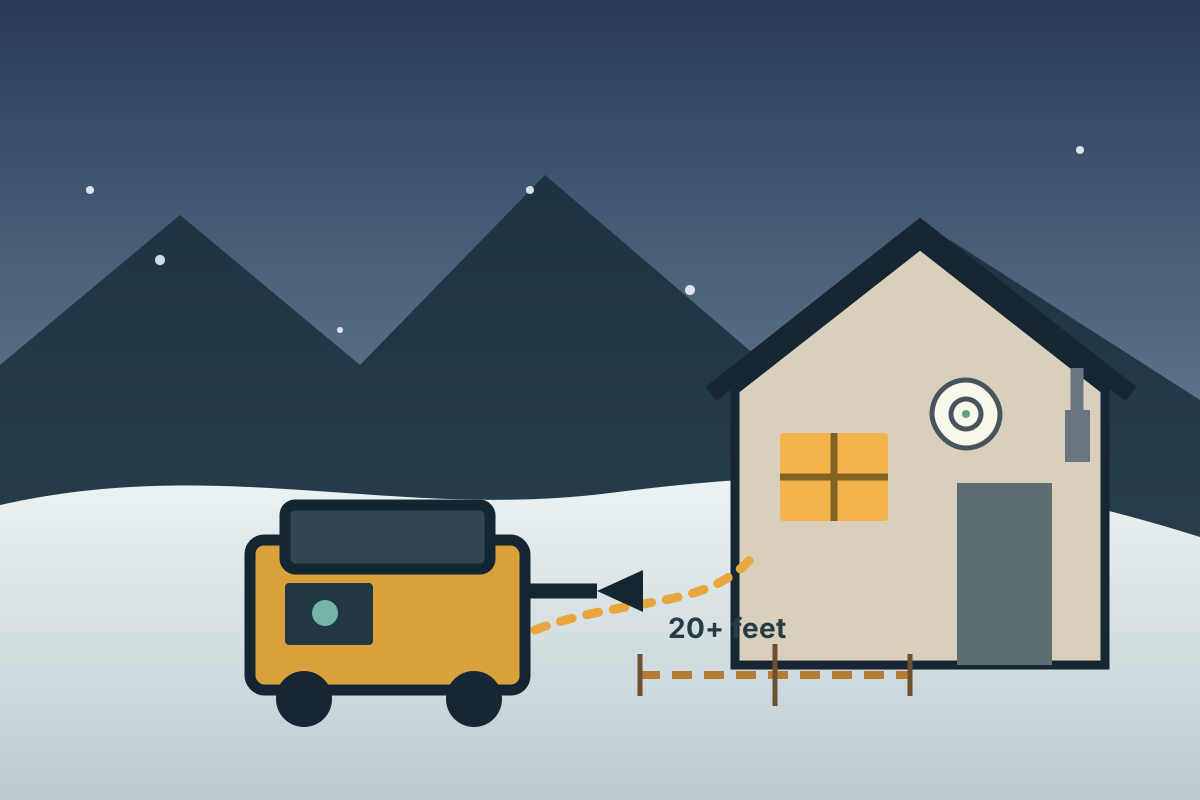
A portable generator can keep a refrigerator, well control, a few lights, or essential medical equipment running when winter weather brings down a line. It can also create carbon monoxide, electrical, fire, and shock hazards within minutes. The safest time to work out placement, cord routing, loads, fuel storage, and shutdown steps is before snow, darkness, and cold make every decision harder.
This guide focuses on portable gasoline, propane, or dual-fuel units that power selected cord-connected appliances. A permanently connected standby system or any connection to household wiring needs equipment designed for that purpose and installation by a qualified electrician.
Choose the operating spot before the outage
The generator belongs outdoors, never in a house, basement, crawlspace, shed, porch, or garage—even with the garage door open. Current guidance from the Idaho Office of Emergency Management, CDC, and U.S. Consumer Product Safety Commission converges on a clear placement rule: keep a portable generator at least 20 feet from the home, doors, windows, vents, and attached garage, with the exhaust pointed away from buildings.
Measure that distance now. Pick a level location where exhaust cannot drift toward your home or a neighbor’s openings. Do not put the machine beneath a window, next to a crawlspace vent, or in a breezeway simply because the cord reaches. Snowbanks and temporary walls can alter airflow; reassess the space after a storm.
A generator must stay dry, but “dry” does not mean enclosed. Follow the manufacturer’s instructions for wet-weather operation and any open-sided cover designed for that model. Never improvise an enclosure that traps exhaust or heat.
Make carbon monoxide alarms part of the system
Carbon monoxide has no color or smell. You cannot use your senses to judge whether exhaust is entering the home. Install battery-operated or battery-backup CO alarms outside sleeping areas and on every level, following the alarm manufacturer’s placement instructions. Test them monthly and know the replacement date printed on each unit.
Headache, dizziness, weakness, nausea, vomiting, chest pain, confusion, or unusual sleepiness can be symptoms of CO exposure. If an alarm sounds or anyone develops symptoms, go outside to fresh air immediately and call 911. Do not search for the source first and do not re-enter until emergency personnel say it is safe.
Decide what the generator will power
Write a short priority list rather than plugging in whatever is nearby. Start with medically necessary devices and the loads that prevent immediate harm. Then consider refrigeration, limited lighting, communications, or a well pump only if the generator and connection method are designed for that load. Heating appliances, electric water heaters, ranges, and central air equipment can exceed a portable unit’s capacity quickly.
Read each appliance nameplate and the generator manual. Motors and compressors can draw more power when starting than while running. Stay within both running and starting limits, and leave operating margin rather than treating the printed maximum as a target. If you cannot determine the load safely, ask a qualified electrician.
Never try to power house wiring by plugging a generator into a wall outlet. This practice, called backfeeding, can energize utility lines, electrocute workers or neighbors, and start a fire. A building connection requires an approved transfer switch or other listed transfer equipment installed for the specific system.
Inspect cords before the weather turns
For cord-connected appliances, use grounded three-prong extension cords rated for outdoor use and for the intended wattage or amperage. Inspect the entire cord for cuts, crushed insulation, loose plugs, missing ground pins, heat damage, or repairs. Replace damaged cords instead of taping over them.
Plan the route so cords do not sit in water, cross a driveway, become buried by a snow shovel, or pass through a door or window where they can be pinched. A long run needs an appropriately heavy conductor; the generator manual and a qualified supplier can help match gauge and length to the load.
Handle fuel as a separate hazard
Store only approved fuel containers in a location permitted by local fire rules and away from living areas, ignition sources, and the generator. Stabilize and rotate gasoline according to product and equipment instructions. For propane, inspect the cylinder, regulator, and hose and store cylinders upright in an approved outdoor location.
Never refuel a running or hot generator. Turn it off, disconnect loads as directed by the manual, and allow it to cool before adding fuel. Spilled gasoline can ignite on a hot engine. Keep a suitable fire extinguisher accessible and know how to use it.
Run a daylight setup drill
- Move the cold generator to the measured outdoor location.
- Confirm exhaust points away from every building opening.
- Test CO alarms and smoke alarms inside.
- Lay out inspected outdoor-rated cords without pinch points or standing water.
- Review the startup sequence in the manufacturer’s manual.
- Connect only the planned loads and watch for overload indications.
- Practice the shutdown and cool-down sequence without refueling.
- Return the generator and fuel to their approved storage locations.
Do not conduct a drill that sends exhaust toward a house or neighbor, and never run a combustion engine simply to test it in a garage. Record the date, oil and maintenance status, fuel condition, cord condition, and next service deadline.
Build the no-generator fallback
A generator may fail, fuel may run short, wind may make the planned location unsafe, or conditions may prevent operation. Keep battery lighting, charged power banks, warm clothing, food that needs no cooking, stored water, and a relocation plan. If a private well stops, your stored water plan matters immediately. If someone relies on powered medical equipment or refrigerated medication, coordinate backup power and relocation thresholds with the healthcare provider and utility before an outage.
Our broader Idaho power outage plan covers food, medication, utility alerts, wells, and livestock. The generator is one option inside that plan, not the whole plan.