Idaho spring flood preparation: plan before the snowmelt
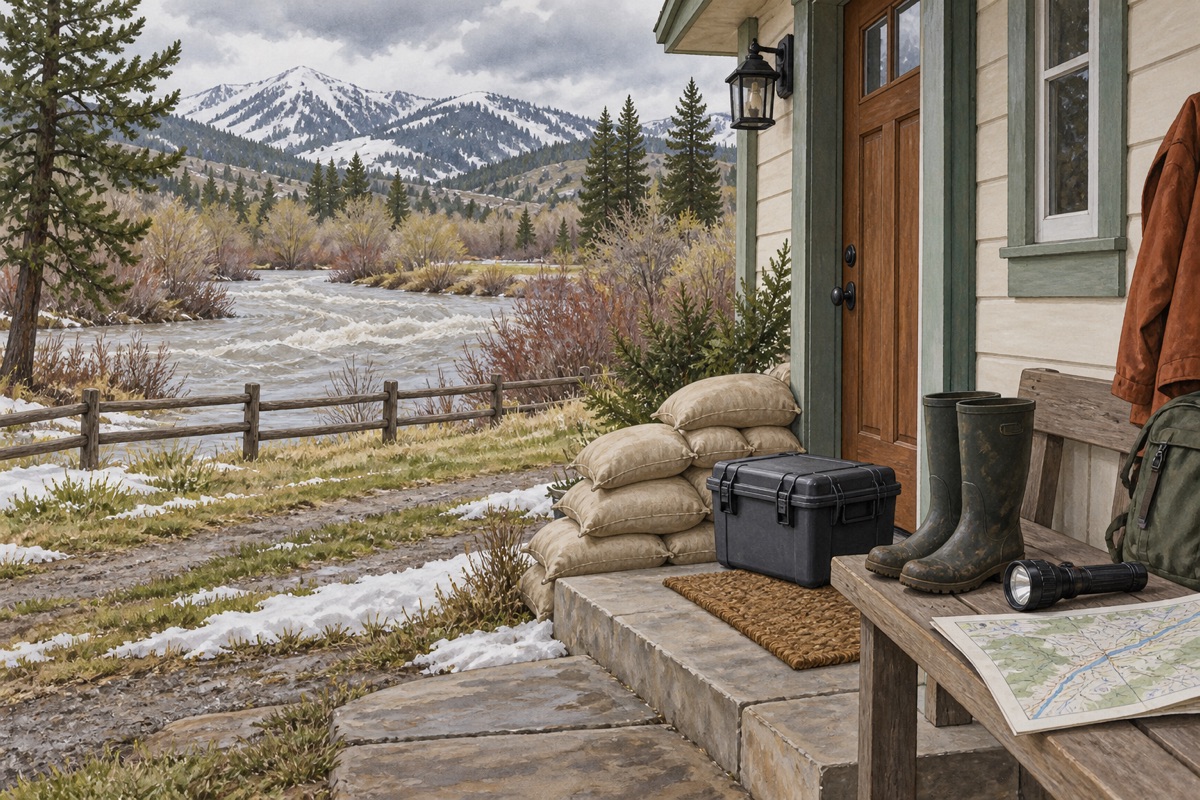
Spring flooding can begin far from the front door. Snowmelt upstream, heavy rain, an ice jam, or a fast-rising creek can change a familiar road before water reaches the house. Preparation begins with the route you would take and the information you would trust.
Check the risk around home and travel routes
Idaho’s hazard planning identifies flooding among the state’s most common and costly natural hazards. Check official flood maps, then ask the county emergency manager about local history, warning systems, and roads that commonly close. A map is a starting point; drainage changes and small channels can still create local problems.
The Idaho Office of Emergency Management’s flood-safety guide explains state alert resources and the difference between an advisory, watch, warning, and flash-flood warning. Write those meanings into the household plan so no one has to interpret them under pressure.
Choose routes that avoid low crossings
Plan at least two ways to higher ground and include a destination outside the likely flood area. Check Idaho 511 before leaving, but obey barriers and instructions you encounter even if an app has not yet updated.
Never walk, swim, or drive through floodwater. Moving water can hide a washed-out road, debris, or an electrical hazard. Turning around is a decision to make before a trip, not after the tires are already in the water.
Move the hard-to-replace items
Put insurance information, identification copies, medication details, and a basic home inventory in a waterproof container that can travel with you. Store irreplaceable items above expected water levels when practical. Photograph rooms and major belongings before flood season, then keep a protected copy away from the property or in secure cloud storage.
Review insurance early. Standard homeowners coverage generally does not include flood damage, and a policy may have a waiting period. Ask a licensed insurance professional about the property rather than assuming coverage from a general article.
Know the safe limits of home preparation
Elevating small valuables and clearing safe drainage paths may reduce damage, but do not enter moving water or work near energized equipment. If water is rising inside, turn off electricity only when authorities or a qualified professional say it is safe and you can reach the breaker without entering water.
After a flood, wait for official clearance before returning. Floodwater may contain sewage, chemicals, sharp debris, and hidden structural damage. Treat cleanup as a separate safety task, not the moment the rain stops.