A two-week emergency pantry without buying food nobody eats
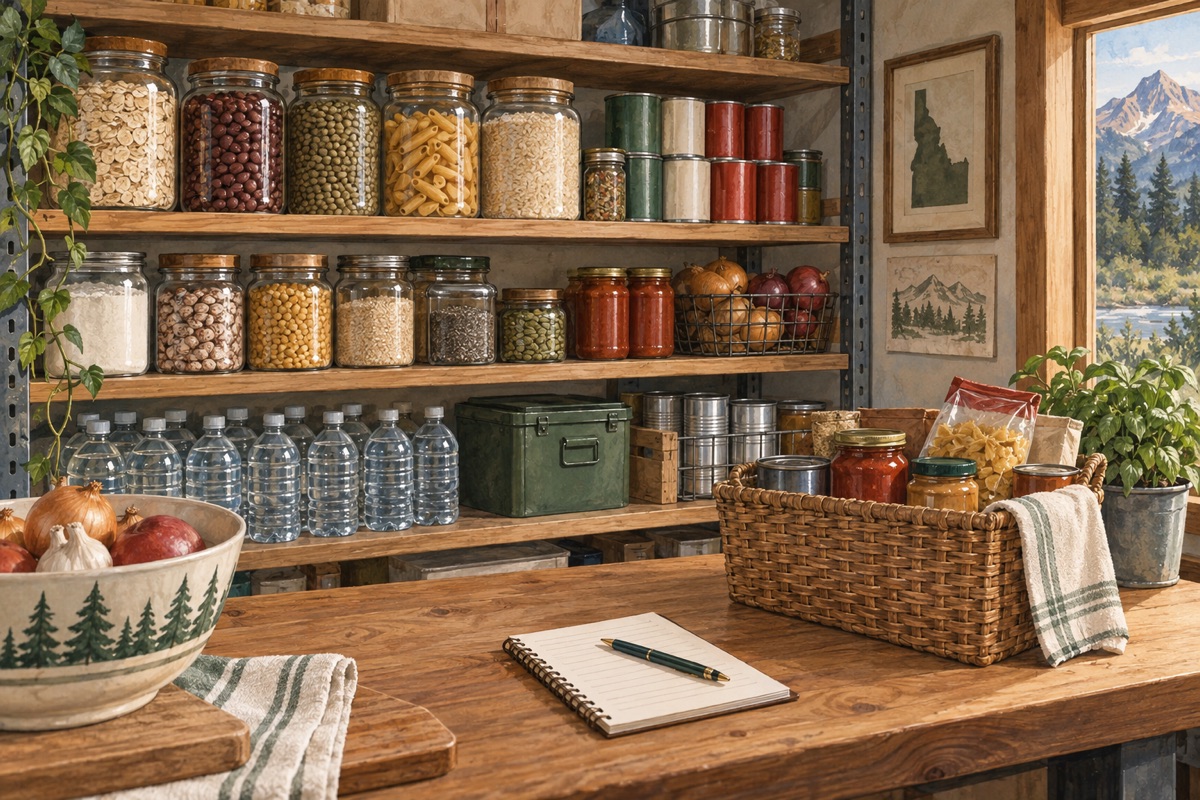
The easiest emergency food to rotate is food that already belongs in dinner. A pantry built from unfamiliar bulk ingredients may look impressive, but it creates work, waste, and disappointment when the power is out or the stove is unavailable.
Plan meals before counting containers
Idaho household guidance recommends building toward a two-week home stockpile, while portable evacuation kits serve a shorter and more mobile purpose. Start with three days of familiar breakfasts, lunches, dinners, and snacks. Note the water, fuel, opener, and cleanup each meal requires, then repeat and vary the plan until it covers two weeks.
Account for allergies, infant feeding, medical diets, pets, and anyone who may struggle with hard packaging. Store at least one manual can opener with the food rather than assuming the kitchen drawer will always be accessible.
Use a first-in, first-out shelf
Put newer items behind older ones and create a small “use next” basket. Once a month, move those foods into normal meals and replace them on the next grocery trip. Record purchase or storage dates clearly; do not rely on memory or a complicated spreadsheet nobody checks.
Keep food cool, dry, and away from direct sunlight. Inspect packaging for leaks, swelling, rust, pests, or broken seals. University of Idaho Extension provides research-based instruction on canning, drying, freezing, and emergency food safety through its IdaHome food-safety program.
Be careful with home preservation
Use current, tested recipes from USDA or Extension sources. Low-acid foods such as meat and vegetables require pressure canning; changing jar size, processing time, or ingredient proportions can make a recipe unsafe. Have a dial-gauge pressure canner checked as recommended by the manufacturer or local Extension program.
Label home-preserved food with the contents and date. When a jar is unsealed, leaking, bulging, moldy, or otherwise suspicious, follow current disposal guidance and do not taste it to decide whether it is safe.
Store water as part of the menu
Dry meals can use more water than expected. The CDC recommends at least one gallon per person per day for drinking and sanitation, with more for heat, illness, pregnancy, or pets. Review our household preparedness guide for the calculation and storage basics.
Finish with a no-power dinner test. Prepare one planned meal without using the refrigerator, microwave, or electric stove. If it uses too much water, creates difficult cleanup, or leaves someone hungry, revise the pantry while the grocery store is open.